
Let's start with the obvious: Iceland has a reputation for being eye wateringly expensive.
And to be fair, that reputation did not appear out of nowhere.
A simple dinner, a tank of gas, or a casual coffee break can make your wallet feel noticeably lighter.
(And I mean, trust us, because unfortunatelly we know).
Buut hey, the real thing, as always, is a bit more nuanced.
Iceland can absolutely be expensive, buuuut the total cost of a trip depends heavily on how you travel!
Some visitors spend thousands in just a few days (and no, we're not talking krónur!), while others manage a full road trip without financial trauma.
The difference usually comes down to a few key factors: where you sleep, how you eat, and how you move around the island.
Ready to learn more?
Average Daily Travel Cost in Iceland

Now, let’s start with the question most travelers eventually type into Google late at night while planning their trip: how much money do I actually need per day in Iceland?
The honest answer is that daily costs can swing wildly depending on how you travel.
Iceland is one of those places where a single dinner can cost the same as an entire day of groceries, and where accommodation can quietly become the largest line in your budget.
For a rough idea, most travelers fall into one of these ranges.
- Budget travel usually sits around 18,000 to 30,000 ISK per day. That typically means cooking your own meals, staying at campsites or basic guesthouses, and focusing on Iceland’s greatest advantage: the most spectacular attractions in the country are completely free. Waterfalls, glaciers, black sand beaches, lava fields. Nature here does not have a ticket office (but it does have a parking fee!).
- Mid-range travel tends to land somewhere around 40,000 to 65,000 ISK per day. This often includes guesthouses or hotels, restaurant meals every now and then, a rental car, and a few paid activities.
- Luxury travel can easily reach 120,000 ISK or more per day, once high-end hotels, guided tours, and frequent restaurant stops enter the picture.
What quickly becomes clear is that a huge part of the budget depends on two decisions: where you sleep and how you move around the island.
Those two factors alone can dramatically change the final cost of a trip.
Later we’ll look more closely at why the way you travel, not just where you go, makes such a big difference in Iceland.
Food Prices in Iceland: What a Meal Actually Costs
Let's start with food: this is usually the moment when travelers first realize Iceland is NOT playing around.
You might arrive thinking you’ll casually grab dinner somewhere in Reykjavík. Then the menu arrives. Then the bill arrives. And that's when you briefly consider starting a fishing career.
Prices do vary, but here are some realistic examples.
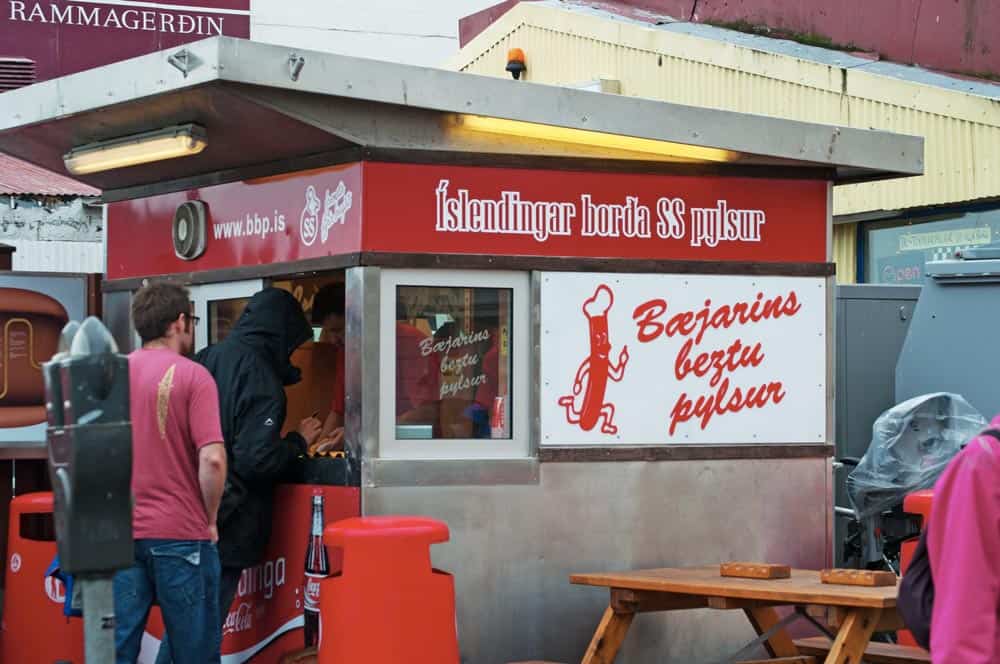
- A classic Icelandic hot dog, the national fast food hero, usually costs around 800 to 1,200 ISK. Cheap, delicious, and probably the only meal in the country that won’t make your bank account sweat.
- A casual restaurant meal often lands somewhere between 4,000 and 7,000 ISK per person. Add a drink and the total climbs faster than an Icelandic volcano on a bad day.
- A beer at a bar? 1,200 to 1,600 ISK is completely normal. Suddenly that happy hour sign starts looking like a public service.
Coffee is slightly less dramatic, but still not exactly pocket change.
A cappuccino typically costs around 700 to 900 ISK. Nothing tragic, just enough to remind you that Iceland sits in the North Atlantic and imports quite a lot of things.
This is why many travelers quickly discover the power of Icelandic supermarkets. Stores like Bónus or Krónan become essential stops during a road trip. Bread, pasta, soups, skyr, snacks, and simple meals cost a fraction of restaurant prices.
Cooking your own food even occasionally can make a noticeable difference to the total travel budget. Not glamorous, perhaps. But when the alternative is paying restaurant prices three times a day, suddenly a simple pasta dinner starts feeling like a financial masterstroke.
Accommodation Costs in Iceland: How Much Do I Pay to Sleep?

Accommodation. This is where Iceland really starts testing the emotional stability of your travel budget.
Food can surprise you. Gas can sting a little (more on that shortly), but accommodation is usually the moment when travelers stare at booking websites and quietly whisper: “uhm, execuse me? That cannot be correct.”
Unfortunately, it often is.
- A bed in a hostel dorm can cost around 8,000 to 12,000 ISK per night, depending on the season. That’s RIGHT. A bunk bed in a shared room sometimes costs the same as a decent hotel in many other countries!
- A guesthouse or budget hotel typically ranges between 18,000 and 35,000 ISK per night. In summer, when half of the planet seems to visit Iceland at the same time, those numbers can climb even higher.
- A mid-range hotel room in Reykjavík can easily reach 40,000 ISK per night or more. At that point the room is not necessarily made of gold: it simply happens to exist in Iceland.
This price jump is not random. Iceland has a small population, a short tourist season, and extremely high demand during the summer months. When thousands of travelers all try to book rooms in the same places at the same time, prices respond accordingly.
The interesting part is that accommodation quickly becomes one of the largest expenses of an Iceland trip, sometimes even bigger than flights or activities.
Which is why many travelers start reconsidering how they structure the trip itself. Because once you realize that every single night comes with a price tag capable of ruining a perfectly good mood, alternative ways of traveling suddenly start looking… strategically brilliant.
We’ll get there in a moment. First, there is another cost in Iceland that deserves its own section: fuel. And yes, that one also has a personality.
Transportation Costs in Iceland (Fuel, Cars, and Other Small Financial Surprises)
NOW let’s talk transportation.
Because news flash: Iceland is big.
Not big in the “Google Maps says three hours but it feels longer” sense, but rather more in the “you will drive for a while and the landscape still looks like the same dramatic lava planet” kind of way.
Unless you plan to stay in Reykjavík the entire time, moving around the island is unavoidable. And that means dealing with two things: car rental and fuel.
Let’s start with gasoline, which in Iceland is less of a liquid and more of a lifestyle choice.
Fuel in Iceland is less dramatic than it used to be, but it still deserves your attention. In 2026 petrol averages roughly 180 to 205 ISK per liter, while diesel sits around 200 to 230 ISK per liter, depending on the station and location.
That means filling a regular tank usually lands somewhere around 10,000 to 14,000 ISK. Not catastrophic, but definitely not the kind of number you ignore while casually tapping your card at the pump.
The good news is that prices dropped noticeably in 2026 after Iceland changed how road taxes are collected. Instead of loading most of the tax into fuel prices, part of it was replaced by a road usage tax, which shifted some of the cost away from the pump.
That being said, you can see how fuel expenses still accumulate quietly.
Now, add the rental car.
- A small economy car usually starts around 8,000 to 12,000 ISK per day in lower seasons. In summer, prices can easily double. Because once again, half the planet shows up at the same time.
- Larger vehicles, SUVs, or 4x4 models naturally cost more, especially if you plan to explore rougher roads or the Highlands.
At this point many travelers notice something interesting.
You are paying for a car during the day, and then paying again for accommodation at night. Two separate costs, both significant, both unavoidable.
Which is exactly the moment when many people start looking at the campervan option and suddenly realize it quietly solves two problems at the same time.
But before we get into that, there’s one more question people always ask while planning their trip.
How much does the entire week in Iceland actually cost?
How Much Does a 7 Day Trip to Iceland Cost?

At this point the question usually goes: alright, KuKu team, I want to know the full story. How much does the whole trip cost once everything is added together?
Because looking at individual prices is one thing. Seeing the total number is… a slightly more emotional experience.
For a one week trip to Iceland, the typical costs look roughly like this.
- A budget traveler can spend around 150,000 to 220,000 ISK for the week (about 1,100 to 1,600 USD). This usually means simple accommodation or campsites, supermarket meals, limited tours, and focusing on Iceland’s greatest attraction: landscapes that are free and everywhere.
- A mid-range trip usually lands somewhere between 280,000 and 450,000 ISK per person (around 2,000 to 3,200 USD). This includes guesthouses or hotels, restaurant meals from time to time, a rental car, fuel, and a few paid activities like glacier hikes or lagoons.
A luxury trip can easily climb above 600,000 ISK per person for a week. At that level the country becomes significantly more comfortable, but also significantly more enthusiastic about your credit card.
The strange thing about Iceland is that the most spectacular parts of the trip rarely cost anything.
You stop the car and the landscape simply appears.
A waterfall dropping off a cliff like it owns the place, or black sand beach that looks like another planet: none of this has an entrance fee.
So the real cost of a trip to Iceland is not determined by the scenery. The scenery is free and almost aggressively abundant.
The final price of the trip is shaped somewhere else (but we guess you figured that out already, didn't you?)
Why Iceland Is So Expensive
If you visit our country, we know you'll probably ask yourself, as everyone eventually did: why is Iceland SO expensive?
Well, let's be clear: it's not because someone decided tourists should suffer (hey, we suffer too!). It’s mostly geography doing its thing.
You see, Iceland is an island in the middle of the North Atlantic. That means almost everything has to be imported. Food, materials AND everyday products.
If it doesn’t grow there or live there, it probably arrived by ship or plane. And unfortunately, that cost does not disappear along the way.
Then there’s wages. Iceland has high salaries and strong labor standards, which is good for the people living there (yayyy!). Less exciting when you are paying for a sandwich that required actual human labor at Icelandic wage levels.
The population is small, quite small. Fewer people means fewer customers, which means businesses spread their costs over a limited market. Prices go up.
And then tourism enters the chat.
As we said, Iceland has a relatively short high season, and during those months demand goes through the roof. More visitors, limited infrastructure, same number of rooms. Prices respond exactly how you expect.
Put all of this together and you get a country where everyday things cost more than expected.
The key detail to keep in mind is that these costs are not random, but rather structural. Which also means you cannot really avoid them completely.
Buut you can decide how much they affect your trip!
How to Travel Iceland Without Going Broke
Now, if you reached this point in our guide, you have probably understood one thing: at this point the goal is no longer to make Iceland cheap.
That's a bit tough, isn't it? It would require changing the entire economy of an island in the North Atlantic. Not happening.
The goal here is to make it manageable.
So, first rule: supermarkets are your best friend. Places like Bónus are where budgets go to recover. Bread, pasta, ready meals, snacks. Not glamorous, we know, but neither is paying restaurant prices three times a day!
Second rule: pick your paid activities wisely. Iceland has tours, lagoons, excursions, all worth it in the right context. But the reality is that some of the most impressive experiences involve parking your car and walking for five minutes.
Third rule: plan your route without trying to do everything. Driving across the island just to “not miss anything” is a great way to spend more on fuel while being too tired to enjoy what you actually see.
And theeeeen? Then there is the part most people underestimate: how you structure the trip.
Because once you start paying for a car during the day and a room every night, costs stack up quickly.
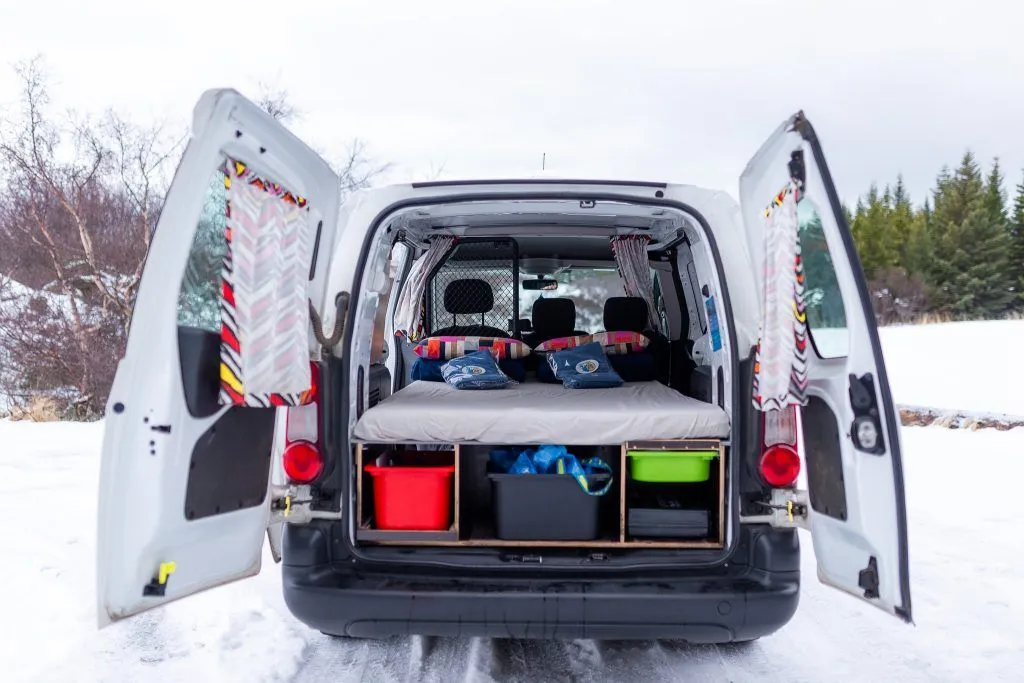
And hey, this is exactly why many travelers end up switching approach halfway through planning and look into campervans. Not because it’s some magical budget hack (no, really, it isn't), but because it simplifies the equation.
One setup instead of two separate expenses constantly competing with each other.
It does not make Iceland cheap. Nothing does (neither do we...).
But it does make the whole trip feel a lot less like a financial strategy game!
Why a Campervan Just Makes More Sense (and Where KuKu Comes In)
KuKu friend, here's the thing: at some point, the math stops being subtle.
Pay for the car. Then pay for the room. And repeat every single day while watching your budget slowly question your life choices.
Or simplify.
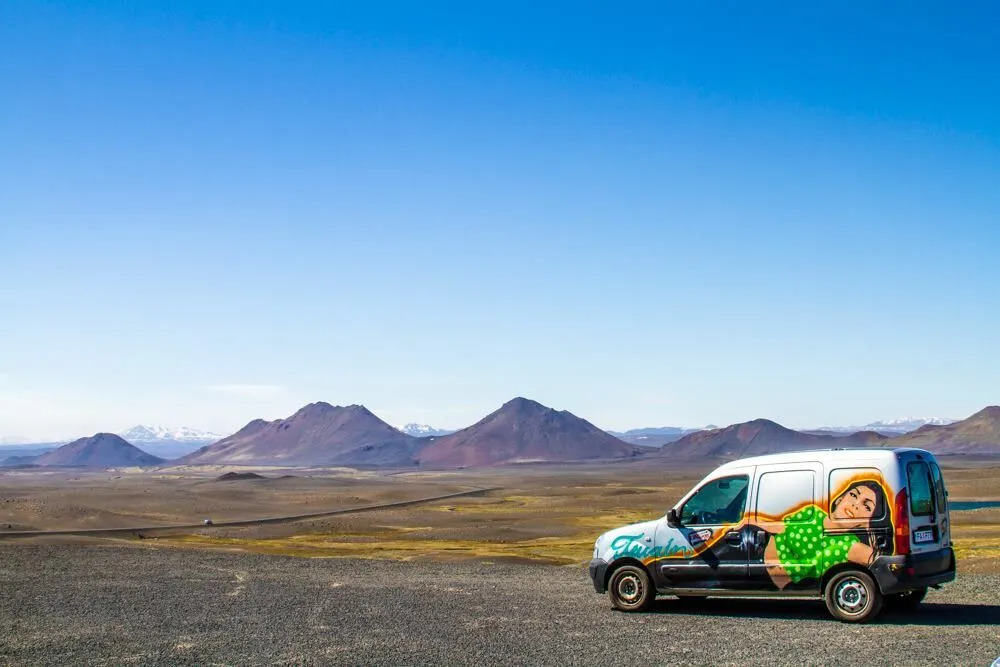
That’s where the campervan starts looking less like a cool travel idea and more like basic logic.
You drive, you sleep, you wake up somewhere that looks completely different from the day before.
No check in times PLUS no check out stress. No need to plan your entire day around a reservation you made three months ago.
AND it also quietly removes one of the biggest cost combinations in Iceland: transport plus accommodation. Suddenly you have just ONE thing!
Then comes the second layer, which is not about money, but more about how the trip actually feels.
You see a place you like. Cool! You stop.
You stay longer. You leave when you want. Iceland works like this. The more flexible you are, the more the country gives back.
This is exactly where KuKu fits in.
Reliable campervans, a range of models depending on how ambitious you feel, prices that don’t try to ruin your week (or month or life), and a team that actually answers when you need help.
Add road assistance, useful extras, a free shuttle from the airport, and a setup that’s designed for people who want to explore without overcomplicating everything.
No unnecessary layers or overengineered travel plans, just how we like it.
With us it's you, the road, and an island that looks slightly unreal most of the time.
Shall we save you a van?