
How Much Are Tolls in Iceland? And Do You Even Need to Care?
You know one thing our KuKuers are always reporting back to us?
"Honestly, driving in Iceland feels suspiciously easy".
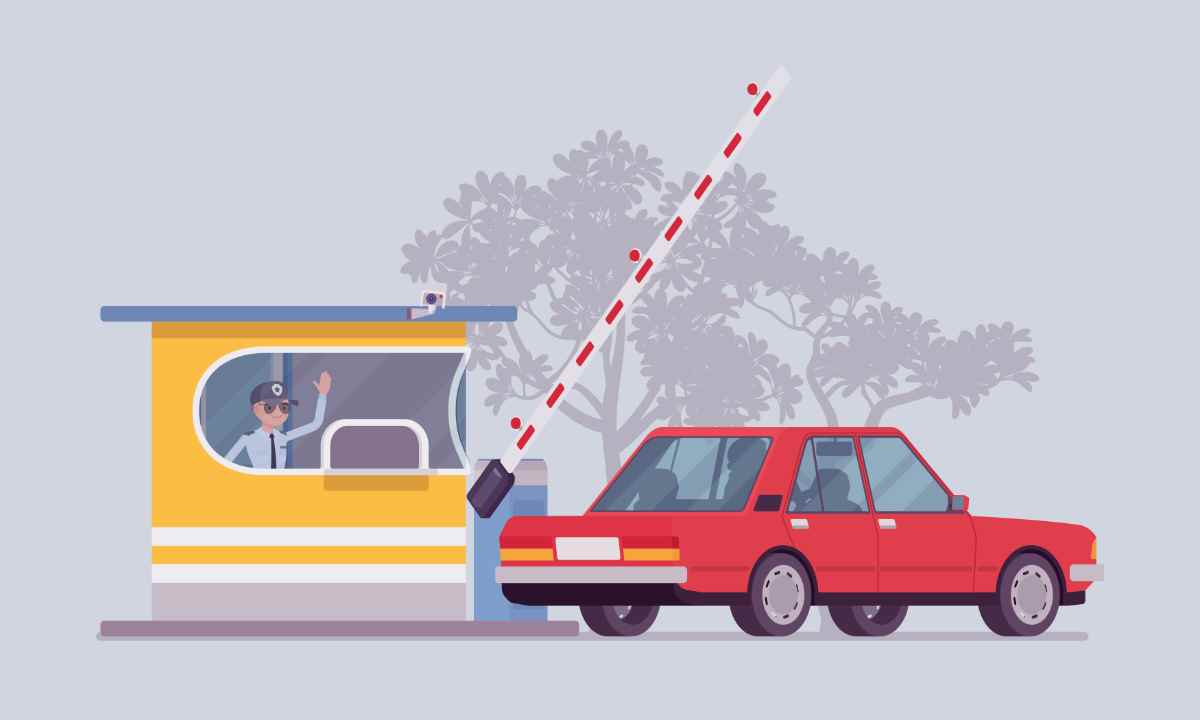
And hey, they might be onto something! After all, we have no toll booths, no barriers.
AND there's no one aggressively waving you into the “cash or card” lane while it’s raining sideways.
Truth is, when you get here you really just get in the car, start driving, and suddenly you’re in the middle of a landscape that looks like someone forgot to finish rendering Earth.
So naturally, at some point, a question pops up:
wait… when do they charge me? Or do they charge me at all?
Because if you’ve driven anywhere else in Europe before your roadtrip in Iceland, you’re used to the system.
Tickets, gates, machines and that one moment where you panic because the card doesn’t work and there’s a line of cars behind you silently judging your life choices.
But our incredible Iceland, on the other hand, mostly skips all of that.
Mostly.
There is one small detail. One exception where the country quieeeetly reminds you that yes, this is still a functioning economy.
So today we're diving headfirst into a potentially expensive question: are there tolls in Iceland?
Are There Toll Roads in Iceland?
No keeping you on your toes here, we'll answer this right away.
Here's how it works: you can drive across Iceland for hours, cross half the country, even complete the entire Ring Road… and no one asks you to pay for the road itself.
So no, there is actually NO system to figure out and there are NO hidden steps. You just drive!
Which, if you’ve ever driven in other European countries, feels slightly suspicious. At some point you expect something to happen.
Maybe a charge, a gate, a “gotcha” moment.
But it never comes.
You see, Iceland simply doesn’t use toll roads in the traditional sense.
The infrastructure is there, the roads are maintained, the landscapes look like they required a small army to build around them… and yet you don't have to pay every time you move from point A to point B.
So yes, driving in Iceland is, for the most part, free.
Until... one very specific moment, where the country randomly changes the rules. We'll get there.
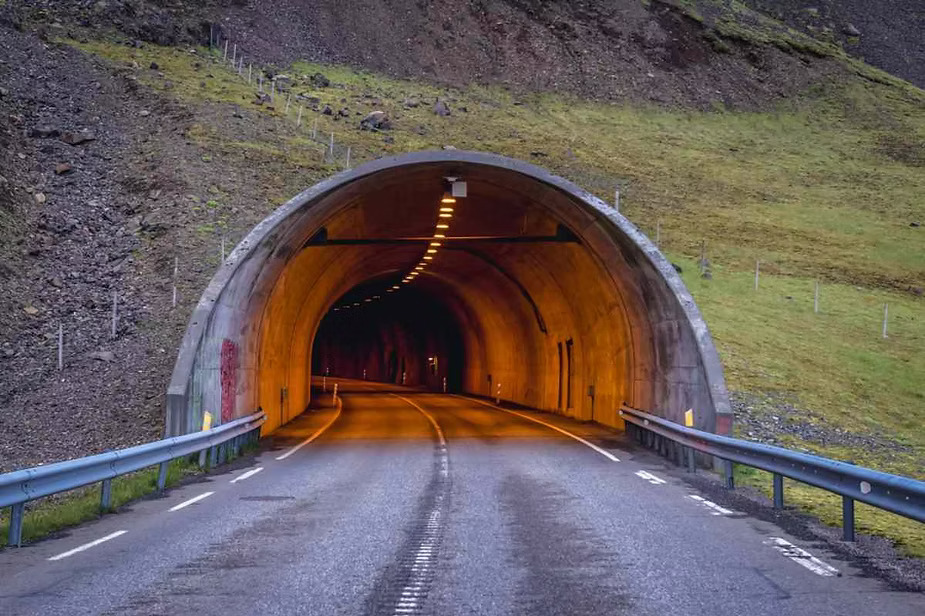
The ONE Exception: Vaðlaheiðargöng Tunnel
So yeah, turns out there is exactly one place in Iceland where driving is NOT free.
And needless to say, it’s a tunnel!
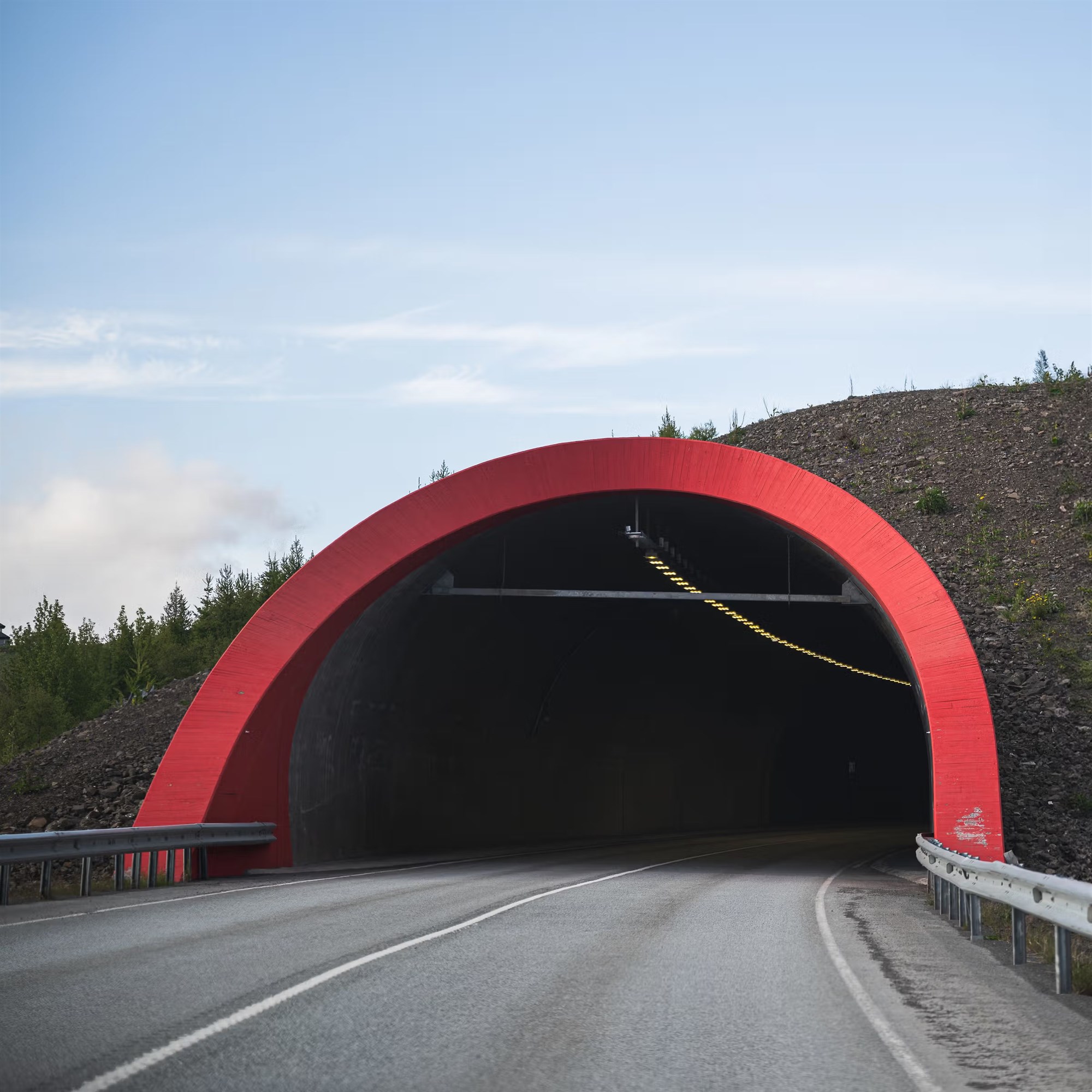
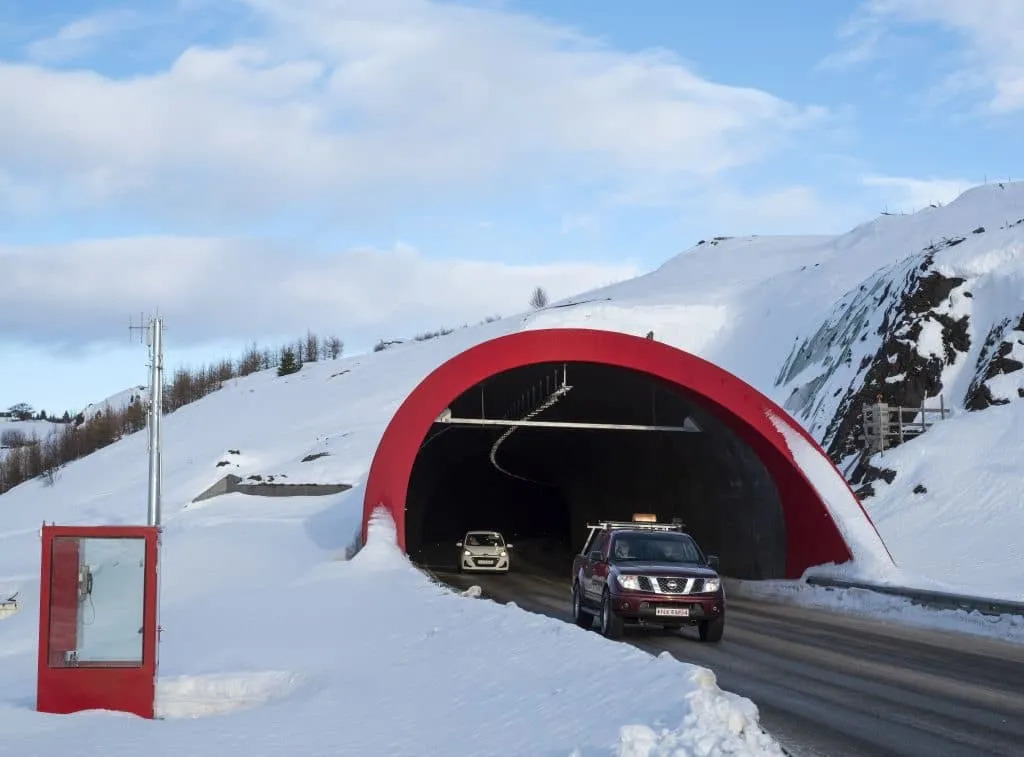
The Vaðlaheiðargöng tunnel, near Akureyri in the north of Iceland, is the only road section where you’ll be actually charged a toll.
It cuts straight through a mountain and saves you about 10 to 15 minutes of driving compared to the older coastal road.
We call it convenient. Fast, even. Others like to call it "slightly less friendly to my already quite desperate travel budget".
How much are tolls in Iceland?
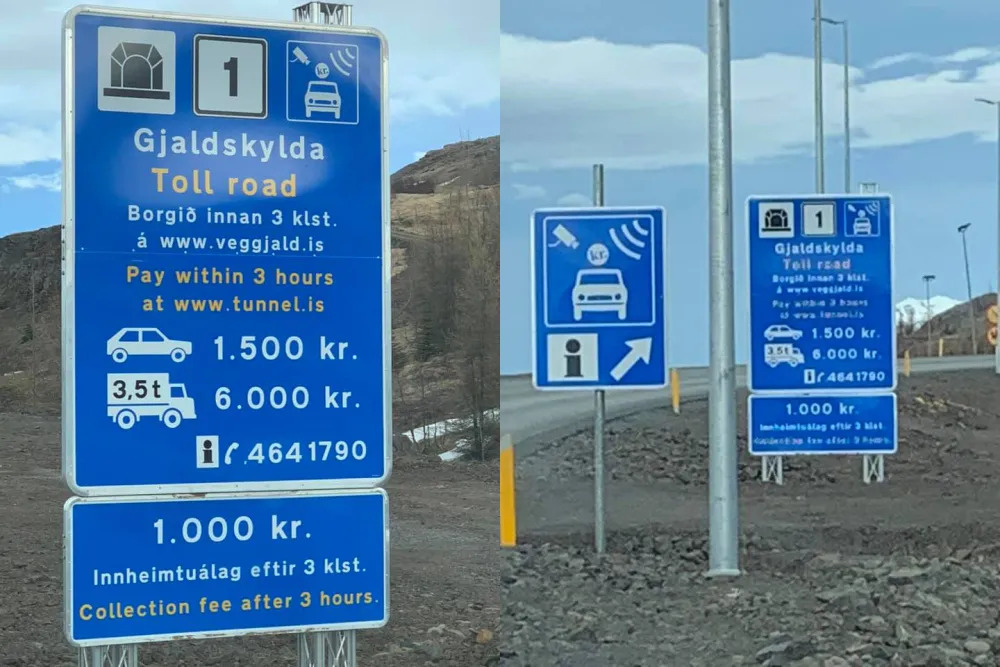
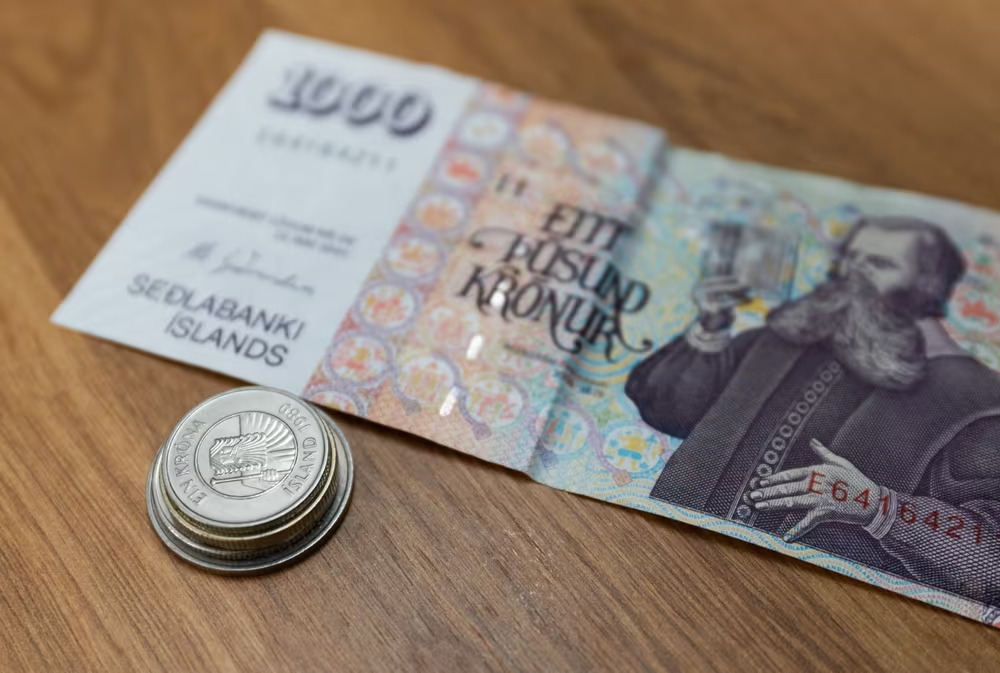
The fee is usually around 2,200 ISK per pass (about 15 EUR or 17 USD), depending on the vehicle.
It's not outrageous, but it is enough to make you notice it, especially after a few days of driving around the country without paying anything at all.
What makes it interesting is that you don’t actually have to take it during your roadtrip in Iceland.
There is an alternative road that goes around the mountain. It’s a bit longer, a bit slower, and often more scenic. In summer, it can easily turn into one of those drives where you forget why you were trying to save time in the first place.
Soooo the tunnel is not a trap, but more a choice.
Pay a small fee and get through quickly, or take the longer route and turn those extra minutes into part of the experience.
How Toll Payment Works in Iceland
So we figured it out: there is indeed one toll in Iceland, which is both not incredibly expensive and fairly avoidable (during the summer!).
But hey, our country still has a few tricks down its sleeves!
This is where Iceland adds a small twist.
When you get to the tunnel, you drive through it… and nothing happens.
No barrier lifts and no ticket comes out of a machine. You'll see there's no one to collect anything. It feels exactly like the rest of your road trip in Iceland (just with slightly more rock above your head).
It's because we're efficient here! The system has already done its job.
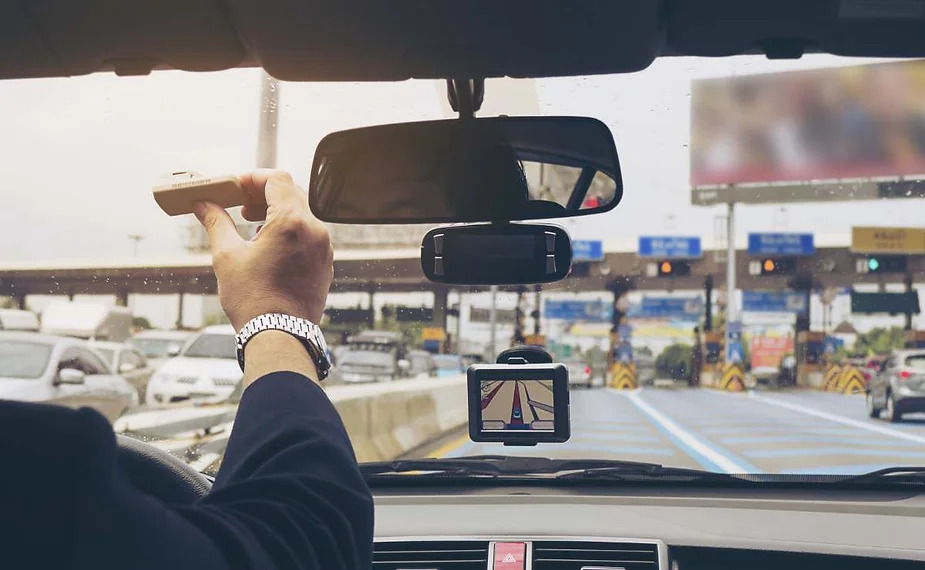
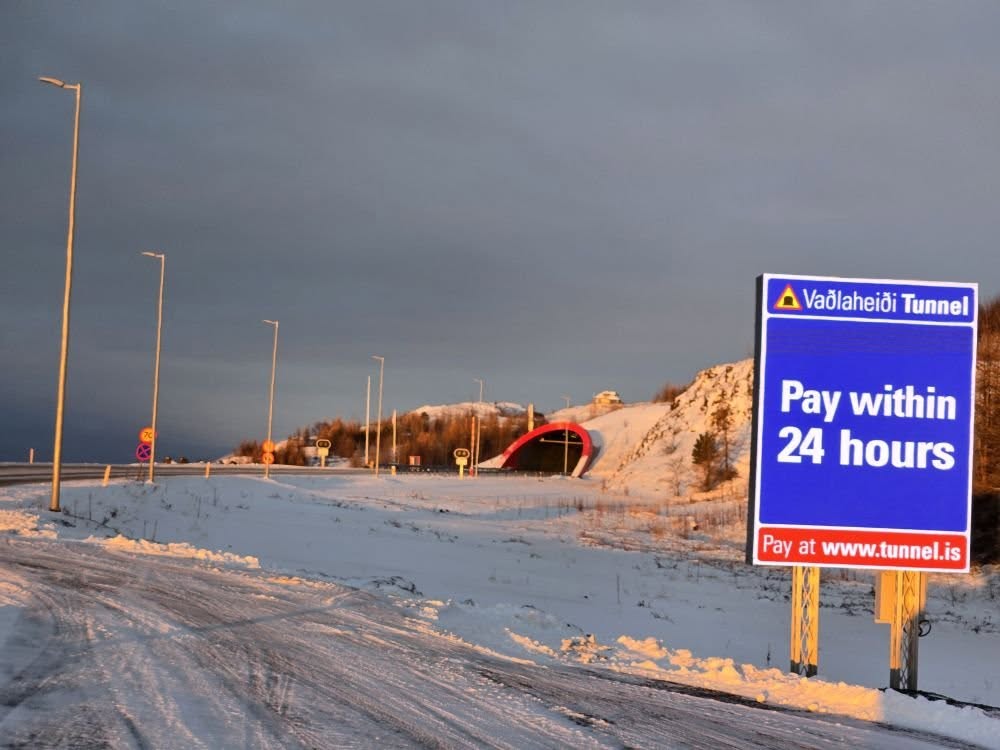
Cameras read your license plate as you pass through, and the payment is linked to that. You’re expected to pay the toll online, either before or within 24 hours after using the tunnel.
Simple in theory. Slightly less simple if you completely forget about it while chasing waterfalls and dramatic landscapes for the rest of the day.
If you’re renting a campervan in Iceland, your rental company will usually step in if the payment is missed. Which sounds helpful, until you realize it comes with an extra fee on top of the original toll.
So the rule is straightforward.
- You won’t be stopped.
- You won’t be reminded.
- But you are still expected to pay.
Very Icelandic, right?
Website To Pay Tolls in Iceland
If you pass through the Vaðlaheiðargöng tunnel, payment happens entirely online. There is no physical payment point, so everything is handled afterward on the official website.
You can complete the payment either before entering the tunnel or within 24 hours after driving through. All you need is your license plate number. The system has already registered your vehicle, so it’s just a matter of matching the plate and confirming the payment.
It’s quick, straightforward, and easy to forget if you move on too fast with your road trip in Iceland. Which is exactly why it’s better to handle it as soon as possible, before the memory of that tunnel disappears somewhere between your third waterfall stop and a random scenic detour.
What Happens If You Don’t Pay Tolls in Iceland
So far so good, right?
(Not really, but let's pretend)!
The next question would naturally be: if nobody is there to tell me to pay, what do I do if I happen to forget?
Relax: nothing dramatic happens.
Not right away, at least!
There'll be no alarms or flashing lights, and your road trip in Iceland will continue exactly as planned. Truth be told, for a while it will feel like you got away with it!
Then reality will catch up.
If the toll isn’t paid within the time window, the system does flag it. And if you’re driving a rental vehicle, the charge is passed to the rental company, and they will forward it to you with an additional administration fee.
This is exactly the point where things stop being clever and start being unnecessary.
What was originally a relatively small toll turns then into a slightly more annoying expense, simply because it was ignored. Not catastrophic, but also not the kind of souvenir anyone wants to take home from Iceland, right?
The logic is simple: pay it when you have, move on with your trip, and keep your budget focused on things that are actually worth it (like a few bars in Reykjavik, for example?).
Can You Avoid Tolls in Iceland?
If you've read this far, you probably already know the answer to this question: do I really have to drive through the tunnel in Iceland?
No, you don't. But like many things in Iceland, the answer depends on timing.
The Vaðlaheiðargöng tunnel is optional. If you prefer not to pay the toll, you can take the alternative road that goes around the mountain, known as Route 84.
This is a regular road, not an F-road, so you don’t need a 4x4 and you’re not suddenly entering off-road survival mode.
In summer, this is an easy choice. The road is usually open, the drive is slightly longer, and the views tend to make you forget you were trying to save time in the first place.
Winter, as always, is a different story.
Snow, ice, and strong winds can affect road conditions, and Route 84 may be temporarily closed or simply less comfortable to drive. In those cases, the tunnel stops being a shortcut and starts being the most reliable option.
So, once again for the record: avoiding the toll is possible. It's just not always equally convenient.
And in Iceland, convenience often depends on what the weather feels like doing that day.
Other Driving Costs in Iceland That Feel Like Tolls (But Aren’t)
Now that THE cost is out of the way, let's face it: Iceland may not have real toll roads, but your budget might still feel the hit from your roadtrip!
Because while you’re not paying to use the roads themselves, there are a few costs that show up often enough to feel… familiar?
Fuel is the obvious one. You’re covering long distances during a road trip in Iceland, and the scenery has a habit of convincing you to take “just one more detour” every hour. The tank doesn’t care how scenic it was.
While fuel prices dropped significantly at the beginning of 2026, a new road tax was introduced that basically makes up for the decrease. Ugh.
Then there's parking, another small surprise, especially in Reykjavík and near popular attractions. Not everywhere, not all the time, but often enough to make you double check signs instead of confidently walking away from the car.
Then there are occasional paid parking areas near major sites. Not the dramatic natural ones, of course (those are usually free!) but the more accessible or heavily visited spots sometimes come with a fee.
Individually, none of these costs feel like a big deal. But together, they start to behave like one.
So no, they're not official tolls, just a series of small reminders that driving in Iceland is simple, but not entirely free.
Do Tolls Change Your Travel Budget?
Now that we know there's only one toll in Iceland, you might wonder: do I need to budget for it?
Well, no, not really!
Tolls in Iceland are almost irrelevant when you look at the full cost of a trip. As we said: there is only one tunnel, you might not even use it, and even if you do, the fee is relatively small.
In short: this is NOT the part of your road trip in Iceland that will make or break your budget.
What actually moves the numbers is everything else. Fuel over long distances. Accommodation every night. Food, especially if restaurants become a daily habit instead of an occasional treat.
That’s where the real impact sits, and that's why most travelers don’t end up optimizing for tolls. They start looking at how to structure the trip in a way that avoids stacking costs on top of each other.
Because once you notice that you’re paying for transport and accommodation separately every single day, the total starts climbing faster than expected.
And that’s usually the moment when the question shifts: bye bye “are there tolls in Iceland?”, welcome “is there a smarter way to travel around it?”.
Why a Campervan Just Makes More Sense (Especially with KuKu Campers)

At some point, the logic becomes obvious.
You’re already paying to move around the island. Then you add a place to sleep on top of that. Day. after. day. Same pattern, same cost stacking up quietly in the background.
Or (and listen to this!), you simplify.
A campervan turns two separate expenses into one setup. You drive, you stop when something catches your attention, and you sleep without having to chase a reservation on the other side of the island.
And in Iceland, that flexibility is the. whole. dang. point.
Plans change. Weather shifts. You find a place you didn’t expect and suddenly staying longer makes more sense than following whatever you booked weeks ago.
That’s where KuKu comes in.
Different campervan models depending on how you travel, prices that don’t try to test your patience, and a team that actually responds when you need help. Add road assistance, practical extras, and a setup built for people who want to explore without turning the trip into a logistics puzzle.
No overcomplication. With us you get a van, the road, and an island that rarely looks the same twice.